

WorldQuant - The world’s local quant hedge fund
More nationalities than the World Cup

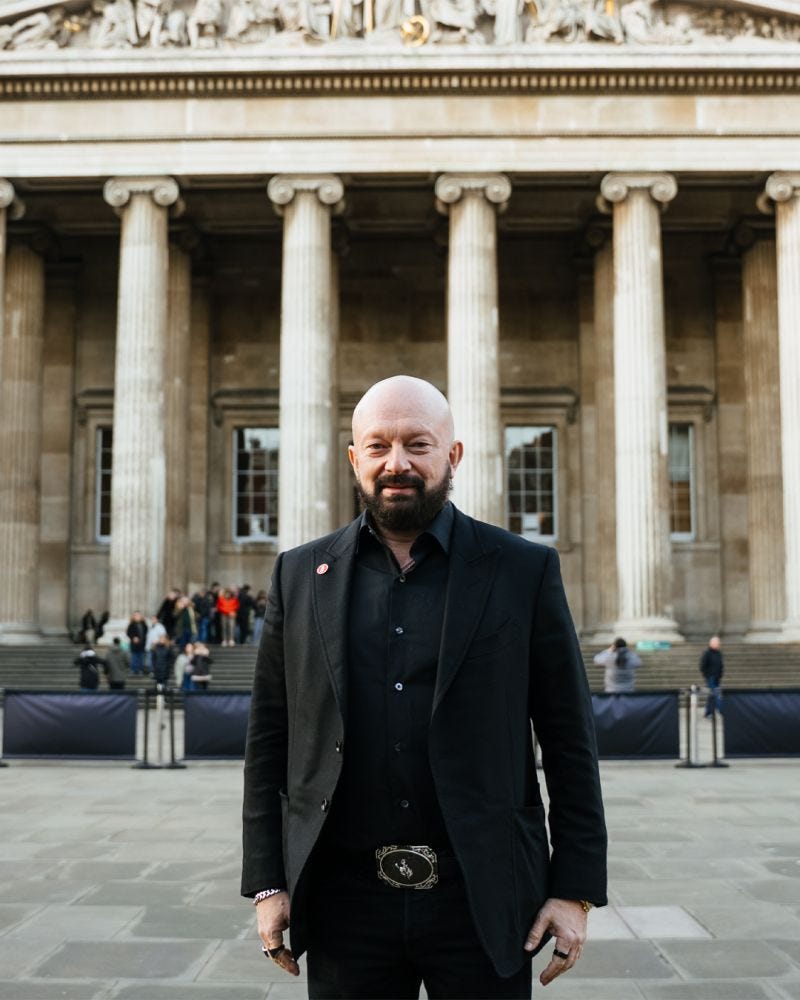
“Talent is global, but opportunity is not” Igor Tulchinsky
Igor Tulchinsky’s colourful dress-sense (well actually he just wears black mostly!) makes him stand out among finance types but he has been making the news in my part of the world with a generous donation…Why I am funding the Bayeux Tapestry’s show at the British Museum
I have been writing a lot about the growth of quant fund giants - D.E. Shaw, RenTec, QRT, CFM, Two Sigma and Squarepoint - that are increasingly of the scale of the large multimanager platforms. I have also written extensively on proprietary trading firms like HRT that overlap increasingly with quant hedge funds in the mid-frequency space.
The amount of data and compute required as well as the level of competition and crowding has increased the barriers to entry in the space. Consequently, we have seen very few new firms successfully launching in the last few years.
But one long established firm has rarely got a mention in this Substack so far. Not because I haven’t noticed their growth but because I haven’t been able to get any investment performance numbers. It always felt like writing a restaurant review - based on the location, decor, ambiance, chef and waiter service - all without tasting the food or knowing if it was any good!
I still haven’t come across any investment performance numbers for WorldQuant but as we are all taken over by World Cup fever, I couldn’t think of a hedge fund that better embodies the tournament’s international spirit. You could probably argue that Millennium is more global, but they are not as deep in emerging markets as WorldQuant.
In this piece I look at how WorldQuant:
Has partnered with the mother ship Millennium,
Rode the trend of net long hedge fund-lite strategies,
Thinks Global and Acts Local,
Has a top team around Tulchinsky,
Focuses on quantity as quality,
Shows scale and efficiency.
Partnering with Millennium
The genesis of WorldQuant is the 12 years that Igor Tulchinsky spent running an equity statistical arbitrage pod for Millennium between 1995 and 2007. WorldQuant was born as an independent firm in 2007 but running money exclusively for Millennium and leveraging Millennium’s infrastructure including risk, compliance, and execution.
It was a challenging start for WorldQuant to face the 2007 quant quake. WorldQuant avoided major losses because in the days ahead of the turmoil, Tulchinsky gradually pulled capital despite daily losses. By the time the sharpest part of the sell off occurred, Tulchinsky had pulled all his capital from the markets. He had learnt the Millennium way of risk management and cutting loss making positions systematically.
In 2015, the Wall Street Journal noted that WorldQuant had been discussing with Millennium the idea of taking in external money. Being the first Millennium pod to ever spin out while continuing to manage Millennium money and then take on external money can’t have been a straightforward negotiation. It took until 2018 for this to become a reality.
Tulchinsky’s pitch to Englander was that there were signals and styles that could be scaled at WorldQuant that did not fit into the traditional Millennium wheelhouse.
The WMA (WorldQuant Millennium Advisors) joint venture between the two firms would not be market neutral or highly leveraged (at least compared to Millennium). It would be net long with long positions of 170 for short positions of 70. It would also hold onto positions for longer with a greater tolerance for volatility, neither of which are traits that Millennium pods have. But it would keep WorldQuant’s focus on equities, and in that way the firm is less diversified than peers that have built large macro and futures footprints.
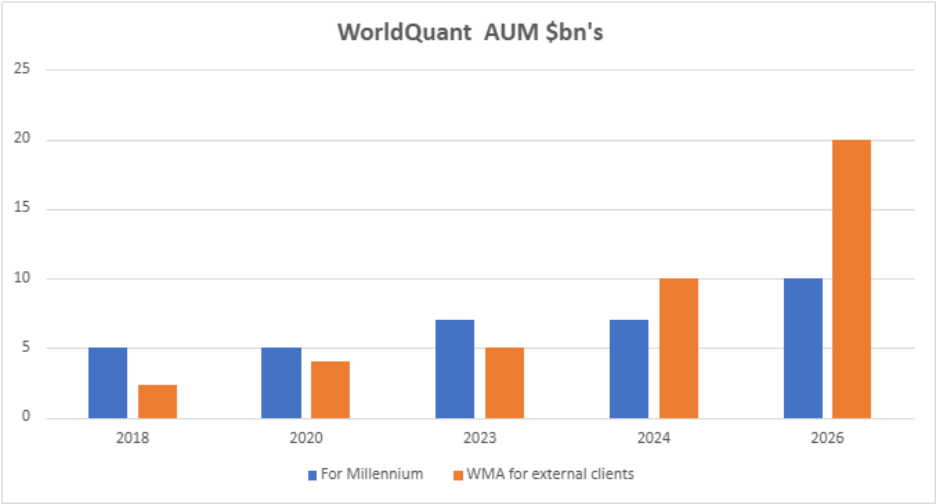
WMA raised $2.3 billion in 2018. It started steadily hitting $5 billion after 5 years by 2023. Then it doubled in size in the next year to $10b billion. According to Bloomberg News, WMA has doubled again in the following eighteen months to more than $20 billion.
Meanwhile, the higher fee money that WorldQuant manages on behalf of Millennium has broadly grown in line with the size of the latter. It has averaged anywhere between 10% and 15% of Millennium’s AUM.
Riding the trend of net long hedge fund-lite strategies
Bloomberg reported earlier this year on the surging demand for equity extension products that typically keep 100% net long exposure but use leverage so that longs exceed 100% and this difference is countered by shorts. It cited data from Nasdaq eVestment that showed that AUM in equity extensions had more than doubled in the 3 years to September 2025, hitting $152.6 billion.
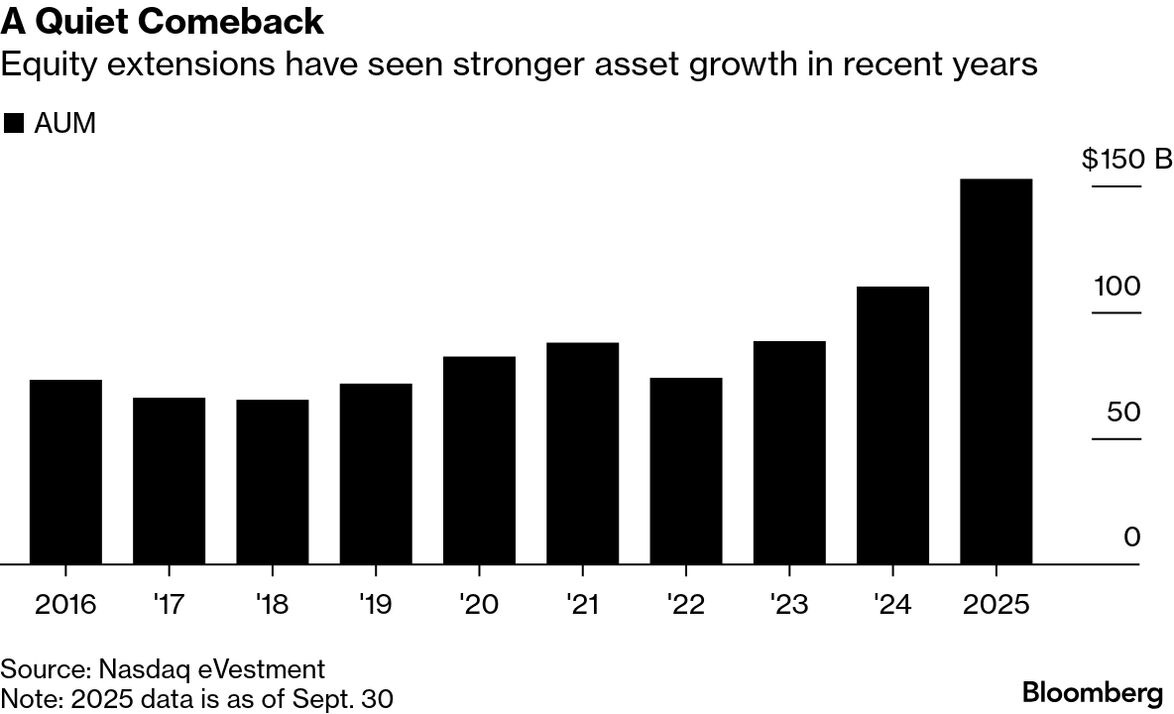
Bloomberg wrote that “WorldQuant Millennium Advisors, a joint venture between Izzy Englander’s hedge fund and the quant firm, launched two new extensions last year after closing its 170/70 fund to new capital at $7 billion.”
My channel checks show that a WMA 150/50 net long offering has raised a significant amount of money recently and that although WMA’s core customer base is institutional, it is also very popular with large private banks. It is unsurprising therefore that WMA is also looking to launch a regular liquidity UCITS fund like Bridgewater and AQR.
Think Global, Act Local
As I highlighted at the start, one of the core beliefs of WorldQuant is “Talent is global, but opportunity is not.” The firm differentiates itself from most in the industry by the lengths to which it goes to source talent globally. Founder Igor Tulchinsky came to America at the age of 11 from Belarus and his immigrant roots likely influenced this.
WorldQuant has long had boots on the ground globally. Even in 2015 when the firm was running only $4 billion for Millennium and no external money, it had 18 offices across more than a dozen countries. Office count kept gradually growing, peaking at 29 in 2020 when it was managing $5 billion for Millennium and $4 billion for external clients.
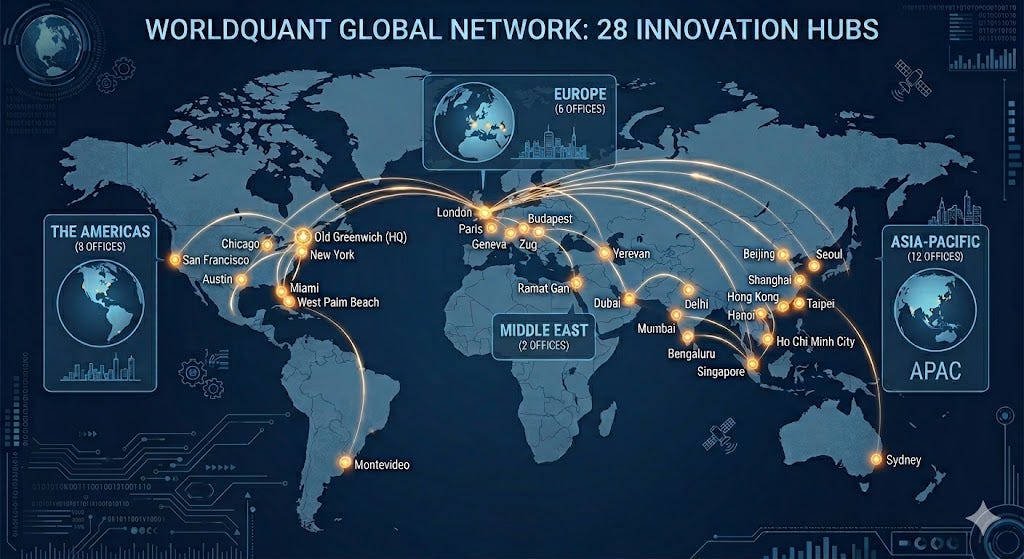
In early 2020, like many of its peers, WorldQuant went on a slimming exercise and shrunk headcount by around 17% to around 600. This involved closing 5 smaller offices in smaller countries. By 2023 WorldQuant’s headcount had grown by 50% to 900, but office numbers remained below the previous peak at 23. Today WorldQuant has more than 1,100 employees in 28 offices.
But what is most interesting is the global footprint with only 7 of those offices in the US and half in APAC and the Middle East.
Old Greenwich is HQ and there are 4 other trading offices in the US and 2 technology focused offices. The only other offices with trading, research and technology are Budapest in Hungary and Singapore. A large number of the Asian offices are research centres.
The map below shows all the current offices.
In its early days WorldQuant was heavily focused on hiring PhD’s with 125 or 25% of its headcount of 500 in 2017 having PhD’s. As the firm has grown and added new hiring channels, the percentage of PhD’s has fallen. Today more than 160 out of its 1,100 employees have PhD’s. Over the 1997-2017 period, with 3 Math’s Olympiad Gold medals, WorldQuant was 6th out of hedge funds and proprietary trading firms behind Citadel (LLC + Securities), Jane Street, Jump Trading, Two Sigma and HRT.
Unlike some of the quant giants that focus on top Ivy League STEM types or Math’s Olympiads, and sponsor Math’s and coding competitions focused on these areas WorldQuant is far deeper in its talent search across emerging markets.
WorldQuant expansions into emerging markets and outside of traditional STEM PhDs is told best by the story of Nitesh Maini. An undergraduate and master's degree from IIT Kanpur in Economics is elite no doubt but hardly aligns with our common assumption of quant research hires being PhDs in Physics or Math's. With only 6 months' work experience at McKinsey, Maini was originally hired as a quant researcher by WorldQuant in India, became a portfolio manager only a few years later and has been Tulchinsky’s strategy chief for many years. Today WorldQuant has 3 offices in India.
Maini leads several key efforts for Tulchinsky’s talent net and is one of the faces of the firm in its continuous online education on quant finance. There are two key initiatives he leads.
Firstly, there is BRAIN, an online platform for signal crowd sourcing. There are 150,000 individuals on the platform that submit alphas. Depending on how useful these are, WorldQuant pays commissions to these external contributors and in some cases offers internships and jobs. Around 60 people have been hired for full-time roles through BRAIN, so the firm believes it has proved to be useful for talent identification and marketing. The jury is still out though on how much value it provides relative to more focused programmes at some of WorldQuant’s competitors.
Secondly, there is WorldQuant’s international quant competition. Although many other quant funds sponsor or organize quant or coding competitions what is fascinating about WorldQuant is how global their one is with 3 stages at the universities, national and then international level with the final typically in Singapore. The competition attracts 37,000 participants across 5,000 universities and 180 countries.
Run separately as a non-profit organization but feeding into the top of the talent marketing funnel is WorldQuant University, which has offered free online master’s degrees in financial engineering since 2012.
The top team
Although Igor Tulchinsky is less well known than his former boss Israel Englander, WorldQuant is very much the baby of Tulchinsky just as Millennium is that of Englander.
